6 That makes art fine arts
THEATRE


In the Western tradition, the text, the play, has always been considered the essential piece of theater, called "the art of the word." Since, in a more nuanced way, this orientation is also prevalent in Eastern cultures, it should at least accept as justified such primacy. In this regard must be made, however, two considerations: first, the text does not exhaust the theatrical event, as a play is not theater until it represents, which implies at least the element of performance; Secondly, there are many ways archaic and modern dramatic performances which ignore completely the word or subordinate elements which mime, body language, dance, music, scenic display.
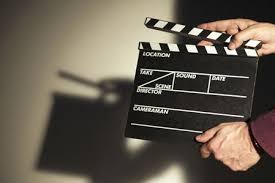
DIRECTION: The personality of the director like creative artist was consolidated at the end of the 19th century, though his figure already existed as coordinator of the theatrical elements, from the scenery to the interpretation. It corresponds to him to turn the text, if it exists, in theatre, with the procedures and aims that are needed. Powerful examples of the above mentioned task were the Germans Bertolt Brecht and Erwin Piscator, dedicating his energy to obtaining of the spectator his maximum capacity of reflection, or the asceticism of the Pole Jerzy Grotowski
.
In the modern theater is usually tax naturalistic orientation, in which the actor through acquisition of tangible and psychological techniques and the study of self and character, try to recreate the scene of this personality. Such, in its main features evolved from the teachings of the Russian Konstantin Stanislavski and widespread in the film world, choice is certainly not the only and ultimately choosing an interpretive style of the show depends on characteristics and indications director.
However, currently, at the beginning of the century, theatrical performance with naturalistic trend is being seriously reconsidered.
 OTHER ELEMENTS:Of strict form, he understands himself for set to the environment in which a dramatic representation develops, and for scenery, to the art of creating the sets. Nowadays, it tends to get in the concept of " device escenográfico.
" to all the elements that allow the creation of this environment, between that it would be necessary to stand out fundamentally to the machinery or intrigue and the lighting. In the antiquity, the scenery was determined to technical and architectural limitations, circumstance that was kept during the whole Middle Ages.
